



As part of this year’s Va3SCoDi activities, a collaborative programme with several upper secondary schools has recently been completed, involving students from various institutions in the Livorno area (Liceo Fermi di Cecina and Liceo di Scienze Applicate Mattei di Rosignano Solvay), engaged in a training experience combining the history of science, public engagement, and laboratory-based learning.
The project was carried out in collaboration with the Museo di Storia Naturale di Rosignano Marittimo (MuSNa), an institution that has long been active in promoting scientific culture through educational initiatives aimed at schools as well as a wider audience of enthusiasts and the general public. The museum context provided students with an ideal environment in which to engage directly with scientific instruments and research practices, while simultaneously enhancing the value of historical heritage.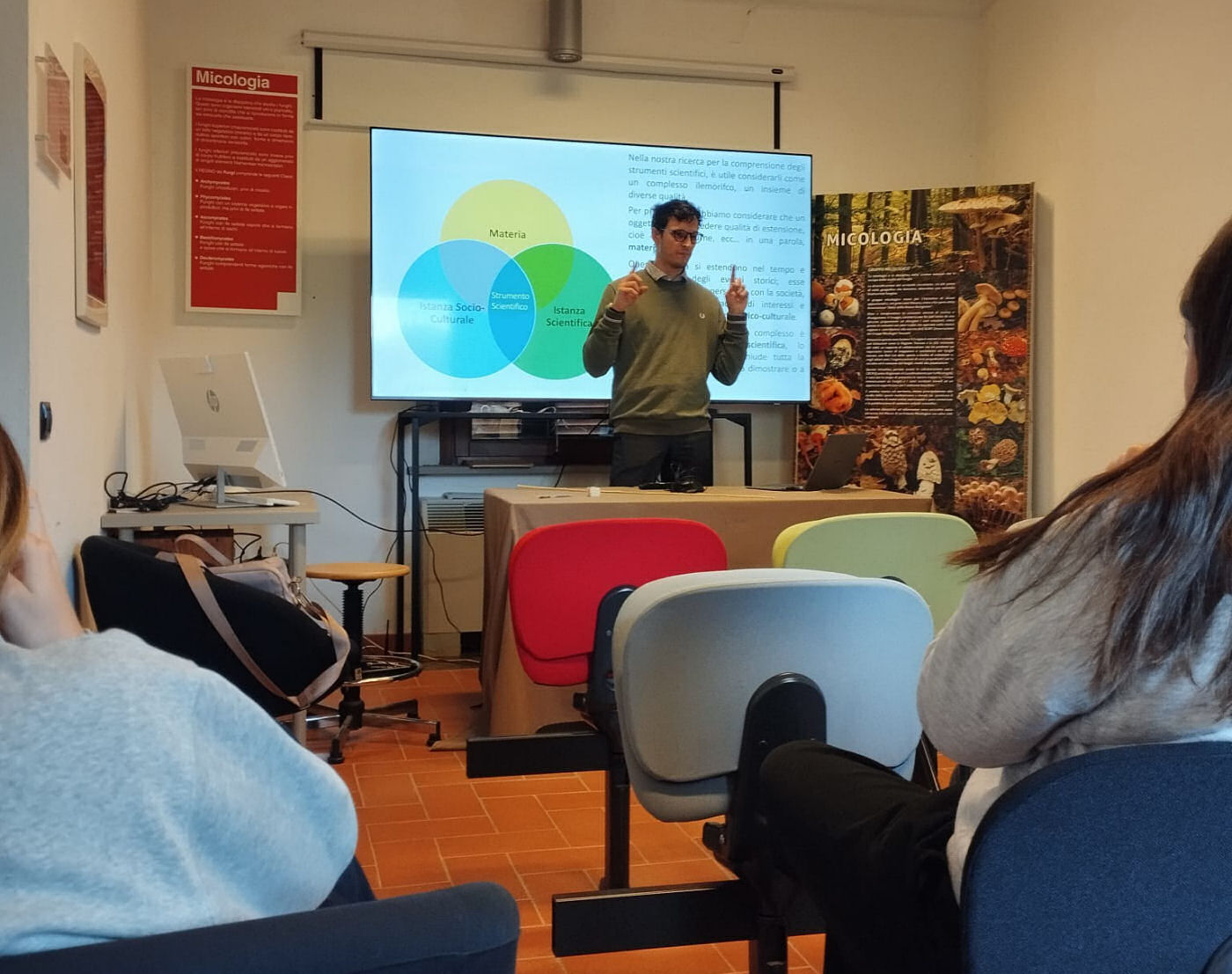
Moments during a lecture
At the core of the experience was the study of several historical scientific instruments, including a large spectrometer kindly loaned by the Department of Chemistry and Industrial Chemistry of the University of Pisa, as well as a more recent reproduction of Volta’s pile. These objects, representative of significant developments in the fields of spectroscopy and electrochemistry, bear witness to the evolution of scientific techniques between the nineteenth and twentieth centuries. Students were first introduced to the research methodologies required when approaching the study of a historical artefact. This enabled them to analyse closely the functioning of the instruments, understand their historical and scientific context, and reflect on their role in the development of knowledge. The programme combined theoretical sessions with practical activities, fostering active and interdisciplinary learning.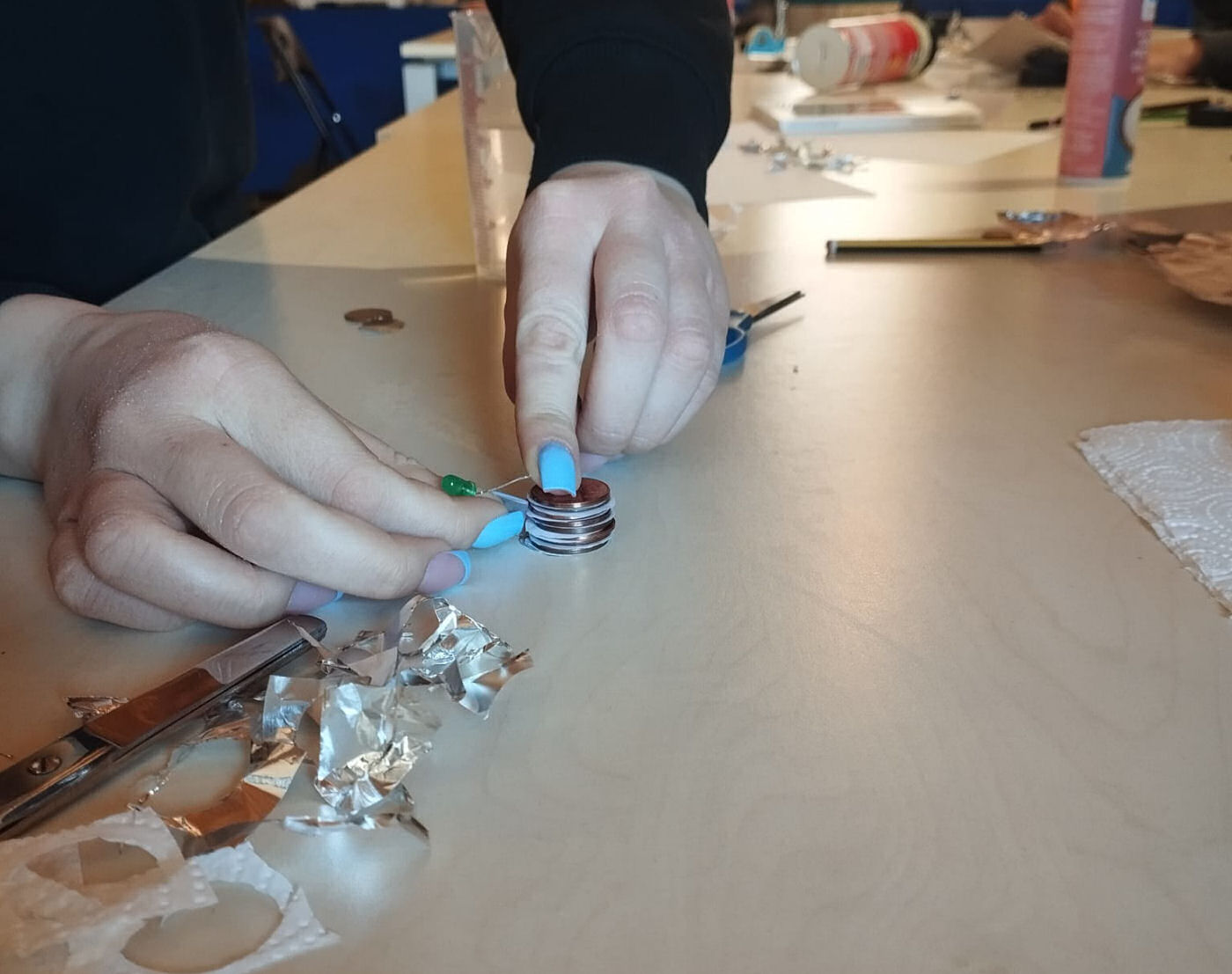
Students compose a stack using copper coins, aluminium foil, and paper moistened with saline solution
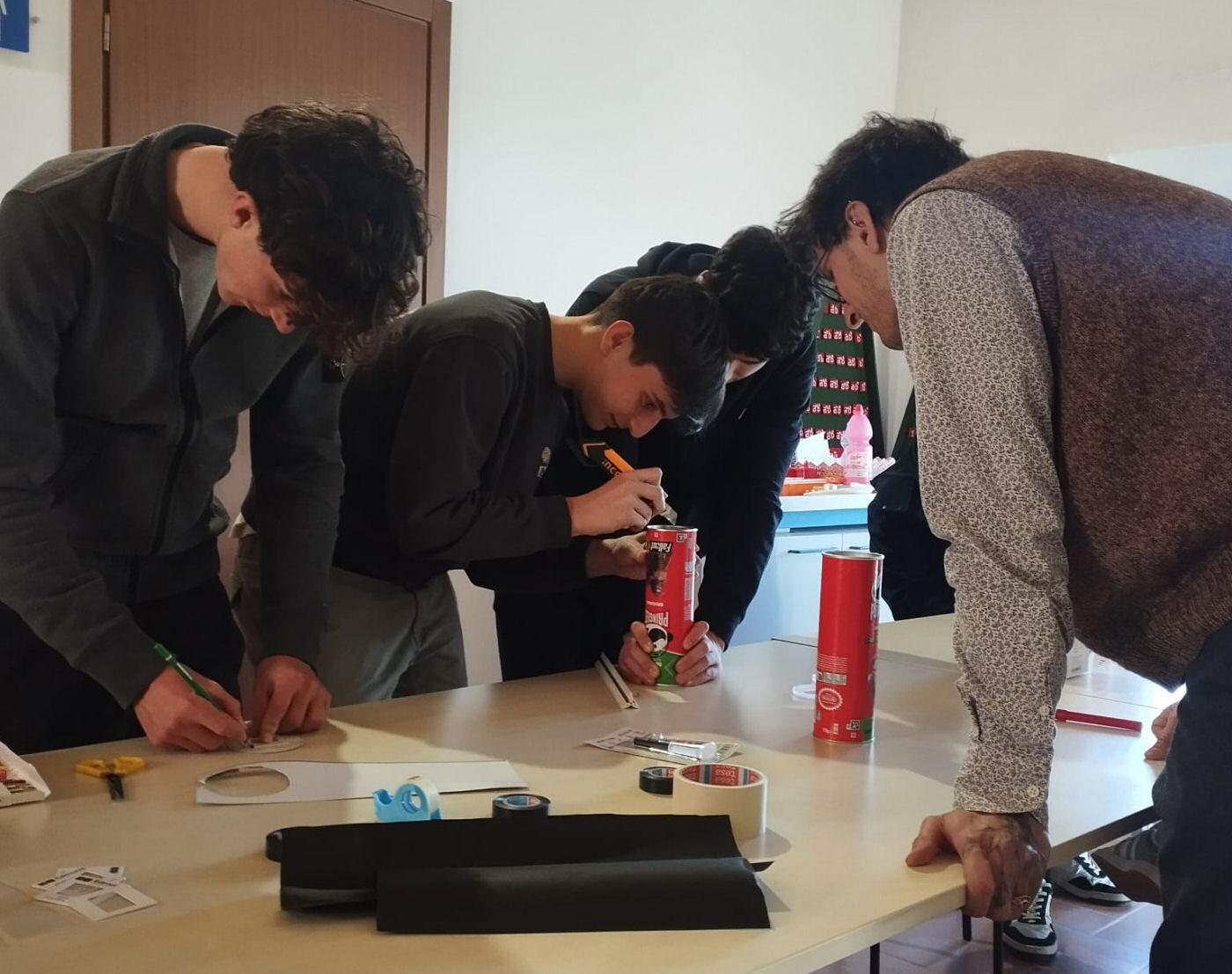
Students working to create the spectroscope
At the conclusion of the project, participants were involved in the design and construction of didactic models inspired by the instruments studied. This work made it possible to translate complex concepts into accessible forms, with the aim of making science more understandable and engaging for a non-specialist audience. Using everyday materials—such as copper coins, aluminium foil, an old CD, and a snack tube—students succeeded in constructing models of the historical instruments. These were not exact replicas, but functional devices reproducing the same underlying physical principles.
The experience represented an important opportunity for growth for the students, who were able to develop scientific, communicative, and design skills, while at the same time contributing to the enhancement of historical scientific heritage. The students’ response was genuinely enthusiastic and confirms the importance that scientific and technological heritage can hold both in preserving historical memory and in engaging not only younger audiences but the wider public with science.
In their own words, it was ‘Bello assai!’”
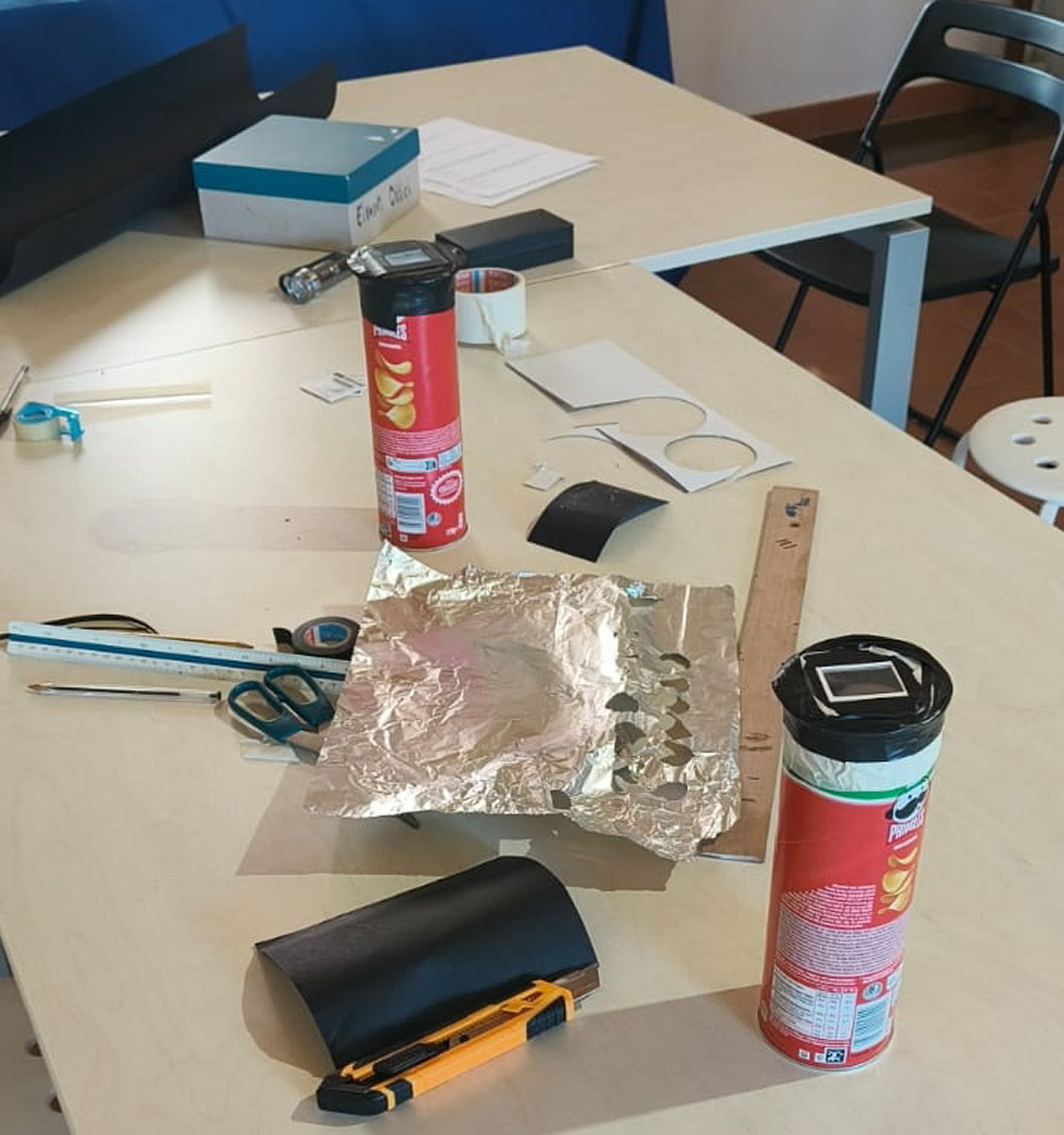
Two spectroscopes made from snack tubes, featuring a slit and a diffraction grating
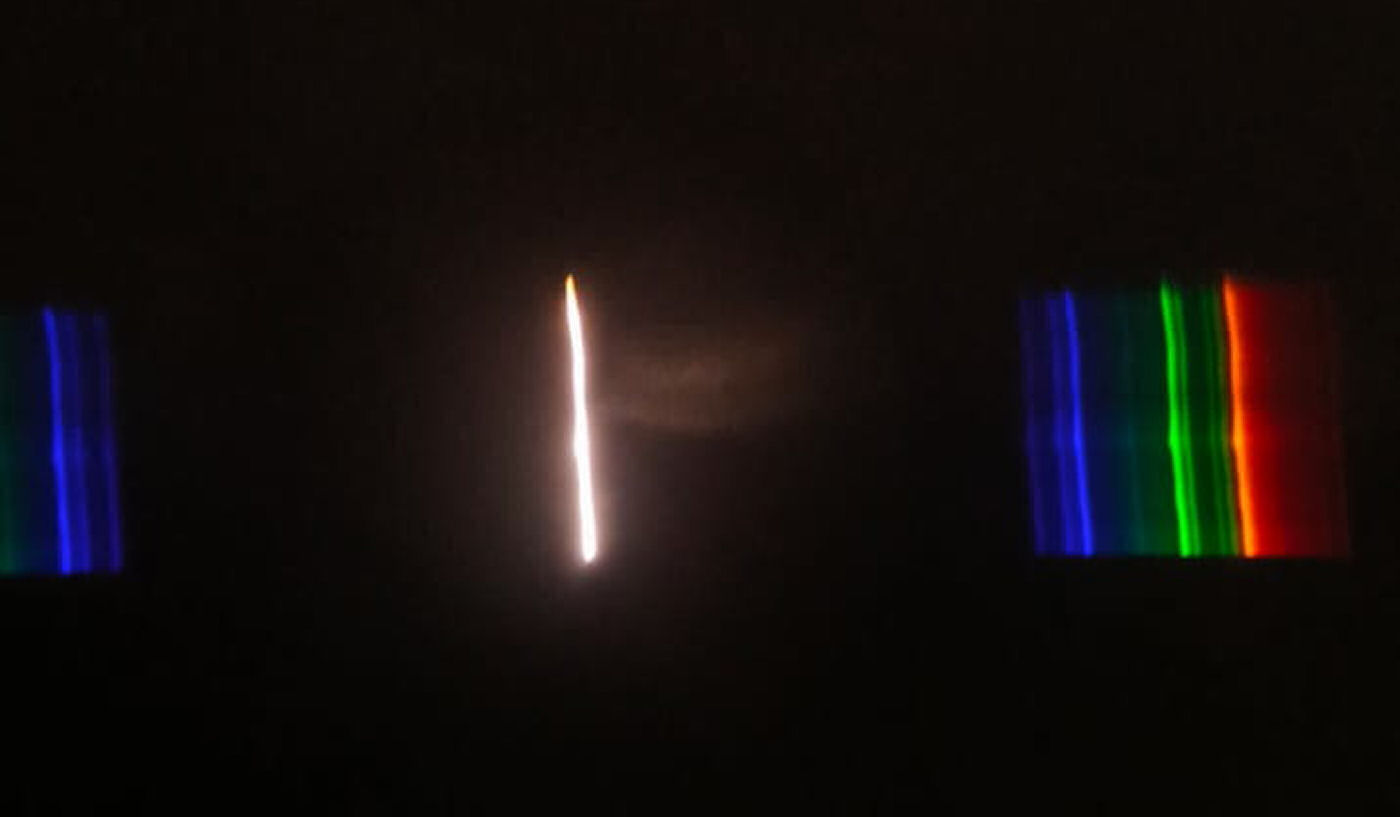
Rainbow spectrum of white light source observed with the home-made spectroscope